
What Is an Electronic Gold Receipt (EGR)? A Beginner’s Guide to Investing in Digital Gold
Gold has always held a special place in Indian households. From weddings to savings, gifting to inheritance, gold is woven into our culture. But let’s be honest: keeping physical gold at home comes with worries. Is it safe? Will it get stolen? Am I paying too much for making charges? Am I even getting the right purity?
What if there was a smarter, safer, and transparent way to own gold without actually holding it? That’s exactly what an Electronic Gold Receipt (EGR) offers.
In this guide, you’ll understand what an EGR is, how it works, why it matters, and whether it makes sense for you. No confusing finance lingo, I promise.
What Exactly Is an Electronic Gold Receipt (EGR)?
Think of an EGR as a receipt that says: “Yes, this much real gold is sitting safely in a vault on your behalf.”
An Electronic Gold Receipt (EGR) is a financial instrument representing ownership of physical gold stored in a SEBI-registered vault. When you buy an EGR, you’re not buying a digital substitute or a paper promise — you are buying actual, certified gold. The only difference is that the gold stays in a secure depository instead of coming home with you.
SEBI (the Securities and Exchange Board of India) introduced EGRs to create a standardized, regulated, and transparent gold trading platform in India. EGRs can be traded on stock exchanges like NSE and BSE, just like you would buy or sell a share of a company.
EGR Product Offerings (Denominations & Purity)
EGRs are designed to be flexible, allowing you to buy gold in various lot sizes. They are categorized by their purity levels and weight denominations. Here are the standard product offerings available on the exchange:
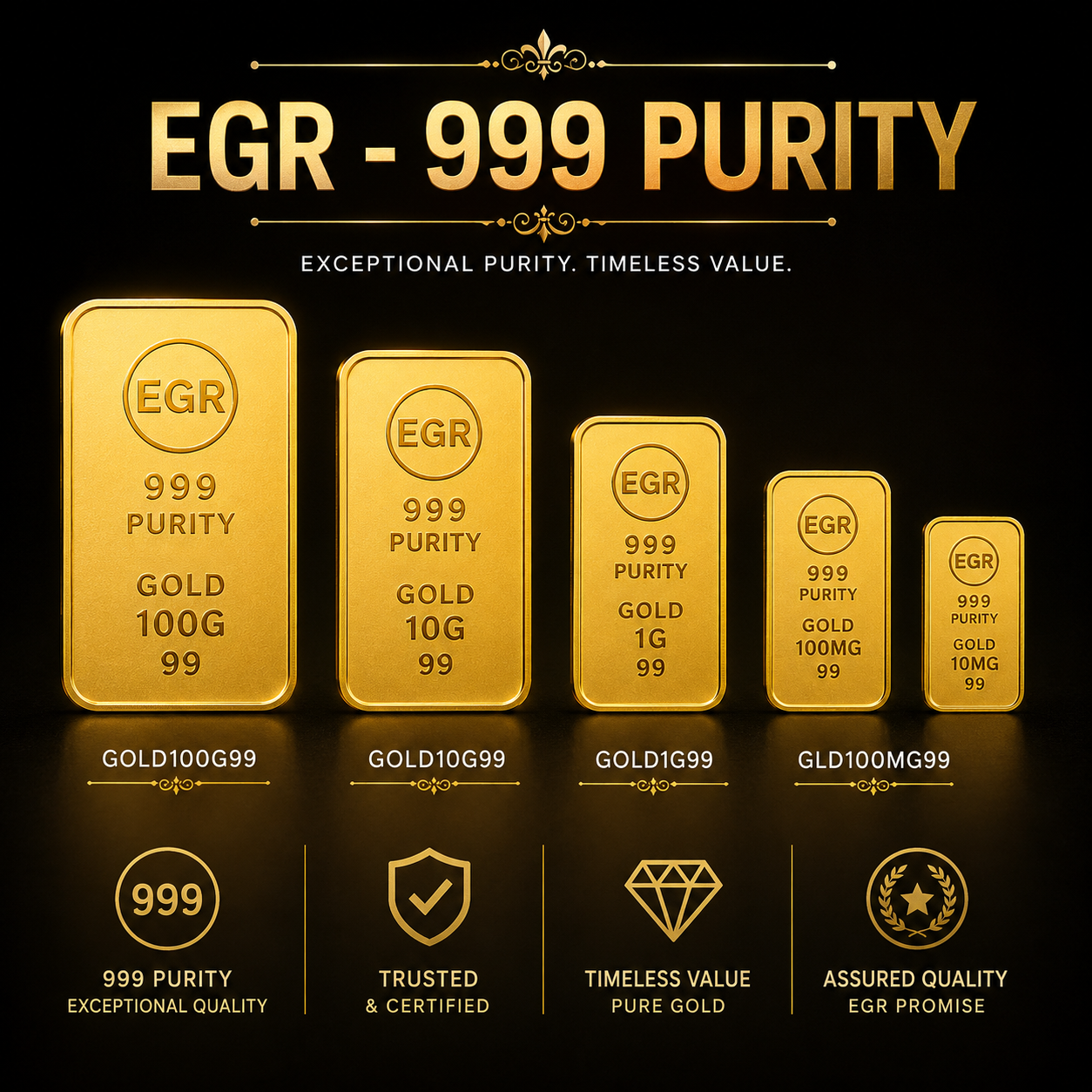
EGR - 999 Purity (99.9% Pure Gold)
- GOLD100G99: Represents 100 Grams of 999 purity gold.
- GOLD10G99: Represents 10 Grams of 999 purity gold.
- GOLD1G99: Represents 1 Gram of 999 purity gold.
- GLD100MG99: Represents 100 Milligrams (0.1 Gram) of 999 purity gold.
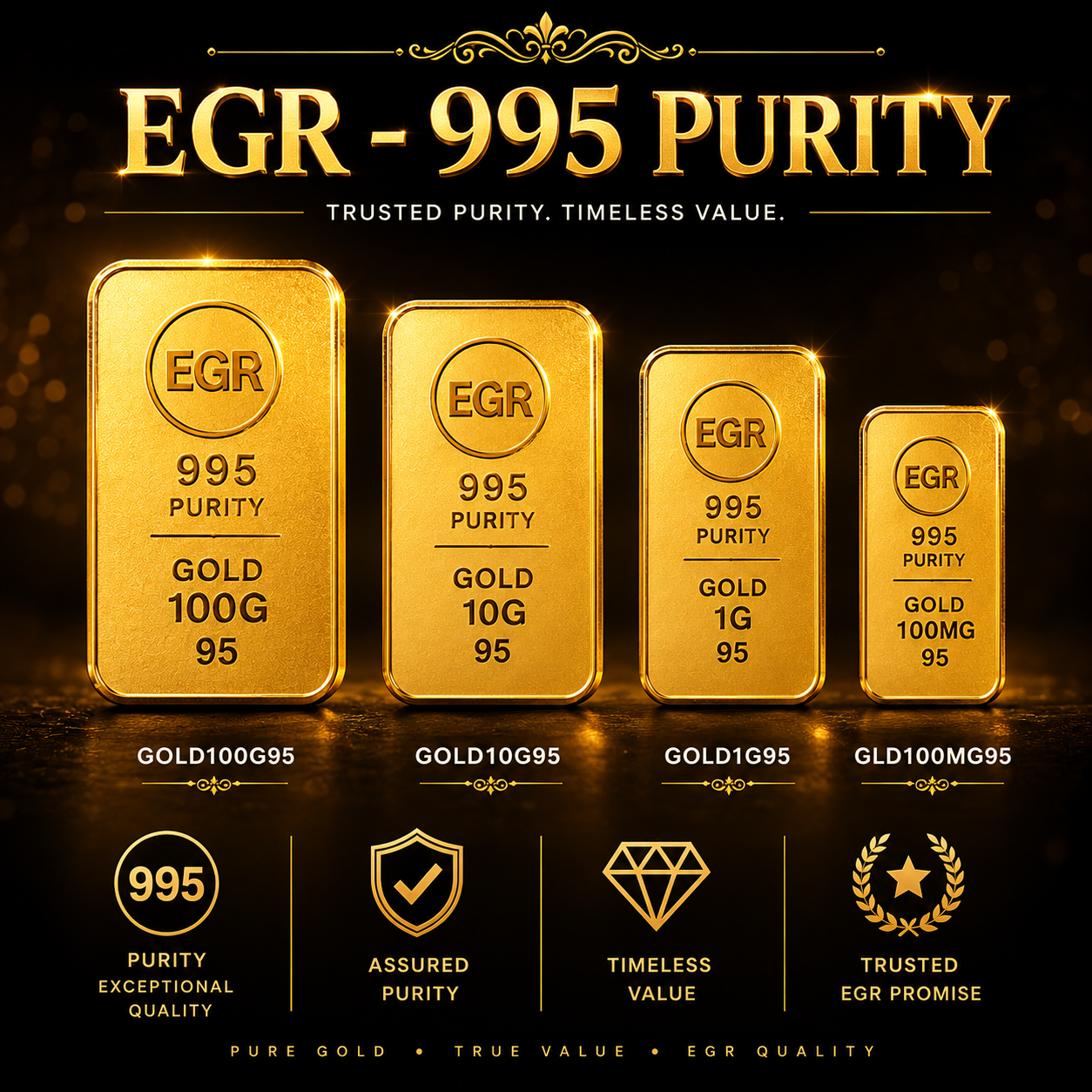
EGR - 995 Purity (99.5% Pure Gold)
- GOLD100G95: Represents 100 Grams of 995 purity gold.
- GOLD10G95: Represents 10 Grams of 995 purity gold.
- GOLD1G95: Represents 1 Gram of 995 purity gold.
- GLD100MG95: Represents 100 Milligrams (0.1 Gram) of 995 purity gold.
How Does an EGR Actually Work?
Let’s break this down step by step in a way that makes complete sense.
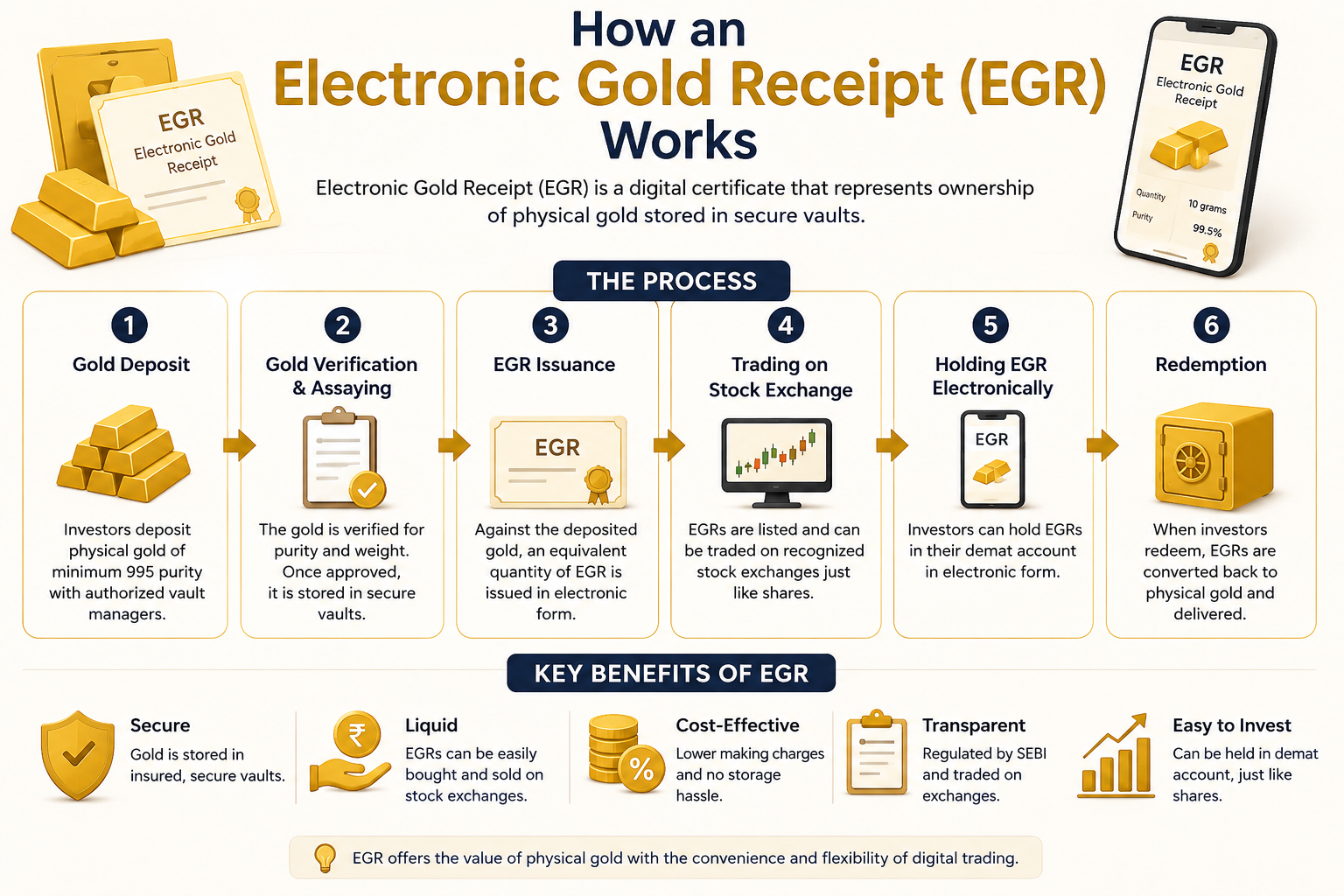
- Step 1: Gold Enters the Vault: It starts with a gold depositor, such as a refiner or bullion dealer, depositing physical gold into a SEBI-registered vault. The vault then issues Electronic Gold Receipts against the gold deposited.
- Step 2: Listed on the Exchange: These EGRs are then listed on stock exchanges. As a retail investor, you can buy them through your existing Demat account — the same one you use to hold stocks or mutual funds.
- Step 3: You Trade Like You Trade Stocks: Once listed, EGRs are freely tradable. You can buy or sell them during market hours like any other listed security. The price updates in real time based on the market rate of gold. Complete transparency with no hidden dealer markup or bargaining at a local jeweler.
- Step 4: Convert Back to Physical Gold (If You Want): You can withdraw the physical gold linked to your EGRs. If you hold the minimum required quantity, you can submit your EGRs and receive actual gold bars or coins from the vault. It’s the best of both worlds.
Why EGRs Are a Big Deal: Key Benefits
You might be wondering — I can already buy digital gold apps or Gold ETFs. Why do I need EGRs? Let’s look at what makes EGRs genuinely useful.
- No Storage Headache: When you own physical gold, you either keep it at home, which is risky, or rent a bank locker, which is costly. With EGRs, the gold is held in a secure, insured depository. You don’t pay locker rent separately and don’t worry about theft.
- Transparent Pricing: The price of an EGR directly tracks the market price of gold. There’s no jeweler’s making charge, impurity risk, or price manipulation. What you see on the exchange is what you pay.
- Demat-Friendly: Your EGRs sit in your existing Demat account. No new account, app, or platform to learn. If you already invest in stocks, adding EGRs to your portfolio is seamless.
- No GST on Transfer: When you sell EGRs to another investor on the exchange, GST does not apply to the transfer. This is a key advantage over physical gold, where 3% GST applies at purchase.
- Small Ticket Size: With options like GLD100MG99, you can invest in increments as small as 0.1 grams, making it accessible for students and first-time investors.
Risks and Challenges to Keep in Mind
Like any investment, EGRs come with a few things you need to think through carefully.
- Custody Charges: While you don’t pay for a locker, vault depositories charge annual custodian fees for holding your gold. These are usually small but worth factoring in for long-term holders.
- Liquidity Risk: EGRs are still relatively new in India’s market. Some days may have fewer buyers or sellers, making it harder to trade at the exact price you want.
- No Jewelry Use: If you’re investing to convert gold into jewelry for a wedding, EGRs work but require withdrawal and additional making charges at a jeweler. It’s not instant.
- Market Hours Limit: Unlike 24x7 digital gold platforms, EGRs can only be traded during regular stock exchange hours.
A Real-Life Example: Rohan’s Smart Gold Investment
Rohan is a 26-year-old software developer in Lucknow. His mother always told him, “Beta, keep some gold — it never loses value.” But Rohan lives in a rented apartment and isn’t comfortable storing physical gold. He also doesn’t want to pay 10–14% making charges at a jeweler.
So he opens a Demat account, finds EGRs listed on the exchange, and buys 5 units of GOLD1G99 (equal to 5 grams of gold at 99.9% purity). The gold is safely stored in a SEBI-registered vault.
Two years later, when gold prices rise by 18%, Rohan sells his EGRs on the exchange during market hours. He doesn’t need to find a buyer, visit a shop, or worry about purity. The money lands in his bank account in 2 days. His mother is happy. His gold is real. Rohan never had to worry about storing it for a single day.
Common Mistakes Beginners Must Avoid
- Confusing EGRs with Digital Gold: Apps like PhonePe and Paytm offer “digital gold,” a product sold by private companies. EGRs are regulated by SEBI and traded on stock exchanges. They are not the same.
- Ignoring the Custodian Fee: Some beginners forget the vault charges an annual fee. Always check this before investing long term.
- Buying Without a Demat Account: EGRs are held in Demat form. Without one, you can’t buy EGRs. Set up your account through any SEBI-registered broker before starting.
- Expecting Instant Conversion to Jewelry: EGRs give gold in bar or coin form upon withdrawal, not ready-made jewelry. You still need to visit a jeweler to get ornaments made.
- Panic Selling on Market Dips: Gold is a long-term asset. Short-term price dips are normal. Don’t let small market movements push you into selling at a loss.
Frequently Asked Questions About Electronic Gold Receipts (EGRs)
Q1. Who regulates Electronic Gold Receipts in India?
EGRs are regulated by SEBI (Securities and Exchange Board of India). The vaults holding the gold are also registered and regulated under SEBI’s framework.
Q2. What is the minimum quantity to buy an EGR?
The minimum tradeable lot size is typically 100 milligrams (0.1 gram) under tickers like GLD100MG99 or GLD100MG95, depending on the exchange.
Q3. Is GST applicable when buying or selling EGRs?
A 3% GST applies when gold is first converted into EGRs (at the depositor level). However, subsequent trading of EGRs between investors on the stock exchange is not subject to GST.
Q4. Can I get my physical gold back from EGRs?
Yes. By holding the minimum required quantity of EGRs, you can initiate a withdrawal request through your broker and receive the equivalent physical gold from the vault.
Q5. Are EGRs the same as Gold ETFs?
Not exactly. Gold ETFs are mutual fund units that track gold prices but don’t represent a direct claim on specific physical gold stored in your name. EGRs are backed by actual, identifiable gold held in a depository on your behalf.
Q6. Do I need a separate account to buy EGRs?
No. You can hold EGRs in your existing Demat account, just like stocks or ETFs.
Q7. Is my gold safe in the depository?
Yes. SEBI-registered vaults follow strict security and insurance standards. The gold is insured against loss, theft, and damage.
Conclusion: Is an EGR Right for You?
The Electronic Gold Receipt (EGR) is a modern way to invest in gold. It combines the reliability of physical gold with the convenience and transparency of the stock market. No purity worries, storage fears, or bargaining at a jeweler’s shop.
If you already have a Demat account and want to add gold to your portfolio in a clean, regulated, and affordable way, EGRs are absolutely worth exploring.
Disclaimer: As always, remember: this article is for educational and informational purposes only and does not constitute financial, investment, or professional advice. Before making any investment decision, consider your own financial goals and, if needed, consult a qualified financial advisor. Gold, like any asset, carries risk — but being informed is always the best first step.